Dedicated to Autism in the United States

sensory regulation

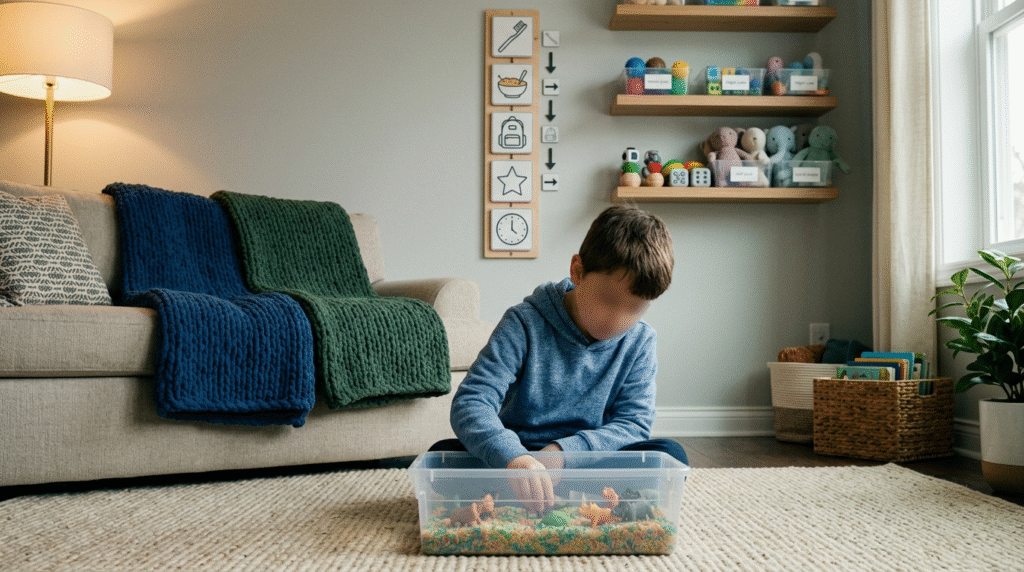
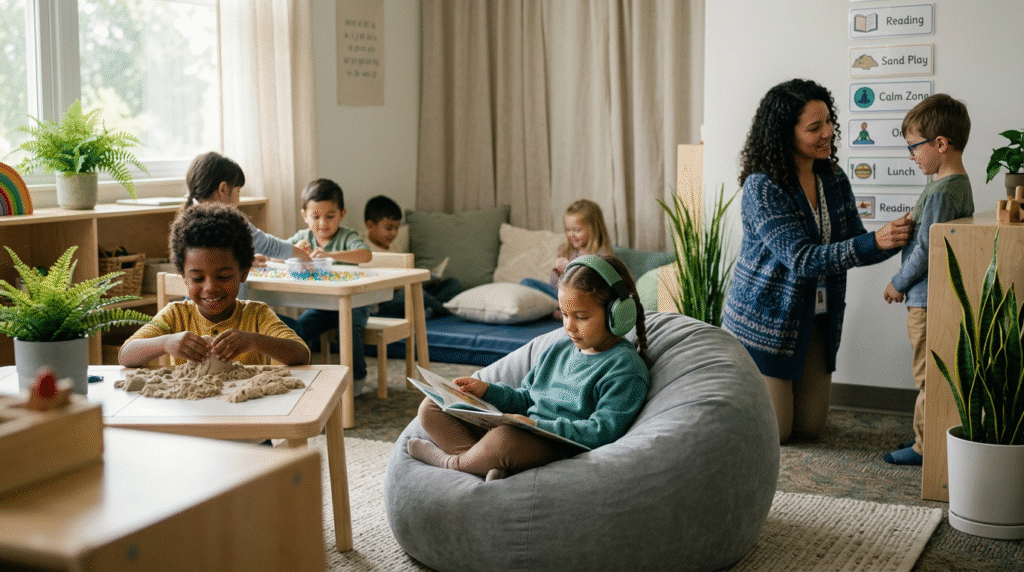
Navigating School with Autism: Creating Sensory-Friendly Bridges Between Home and Classroom

Supporting school-aged autistic children means creating sensory-friendly environments that bridge home and classroom. Learn how to foster regulation and joy through practical strategies and collaboration.
Navigating School with Autism: Creating Sensory-Friendly Bridges Between Home and Classroom Read More »

Autism Caregiver’s Decision Guide: Creating Sensory-Friendly Homes & Routines for Joy and Regulation

Creating a supportive home environment for an autistic loved one involves thoughtful decisions. This guide empowers caregivers to assess needs, prioritize sensory modifications, and build routines that foster joy and regulation.

Autism Caregiver’s Decision Guide: Creating Sensory-Friendly Homes & Routines for Joy and Regulation Read More »

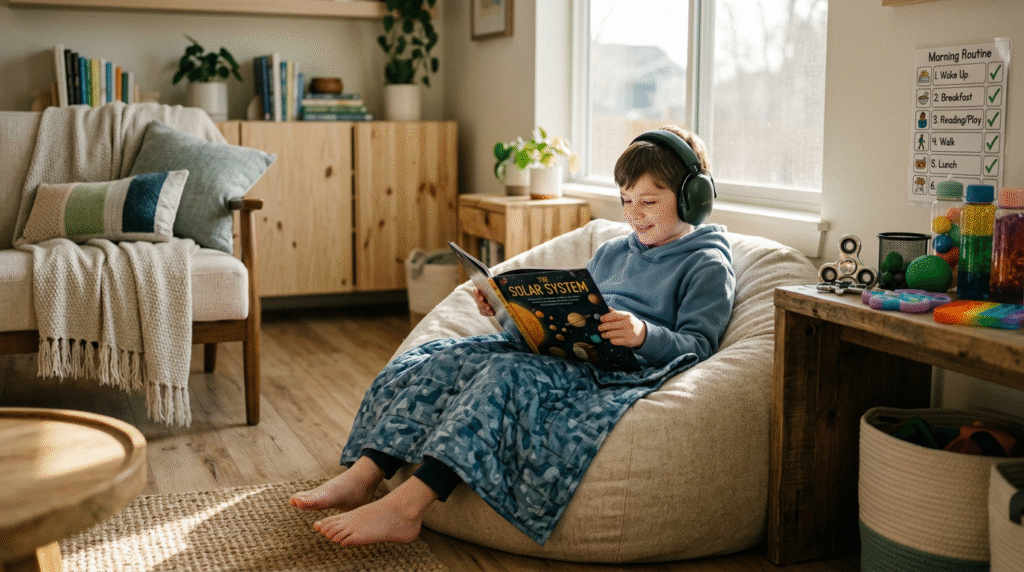
A serene, sensory-friendly living room with soft lighting, an autistic individual relaxing with headphones and a weighted blanket, surrounded by various sensory tools and a visual schedule, illustrating an evidence-based approach to comfort and regulation.

The Science Behind Sensory-Friendly Environments for Autism: What the Evidence Says

What does the research say about creating sensory-friendly environments for autistic individuals? This guide explores the evidence, from neurological insights to the efficacy of routines and specific adaptations.

The Science Behind Sensory-Friendly Environments for Autism: What the Evidence Says Read More »

Autism Home Support Services: Low-Risk Sensory Strategies for a Joyful Home

Learn effective, low-risk autism home support strategies to cultivate a sensory-friendly environment. This guide offers practical tips for modifying spaces and routines to enhance comfort, regulation, and joy for autistic individuals, making everyday life more manageable and affirming.

Autism Home Support Services: Low-Risk Sensory Strategies for a Joyful Home Read More »

Observable Signs of Sensory Processing Differences in Autism: From Recognition to Support

Understanding how autistic individuals experience sensory input differently is key to fostering well-being. This guide helps you identify observable signs of sensory processing differences and outlines supportive next steps.

Observable Signs of Sensory Processing Differences in Autism: From Recognition to Support Read More »